
InnoScan 710IR microarray scanner: new publication
Epitope Reorientation in Sequential Influenza Vaccination
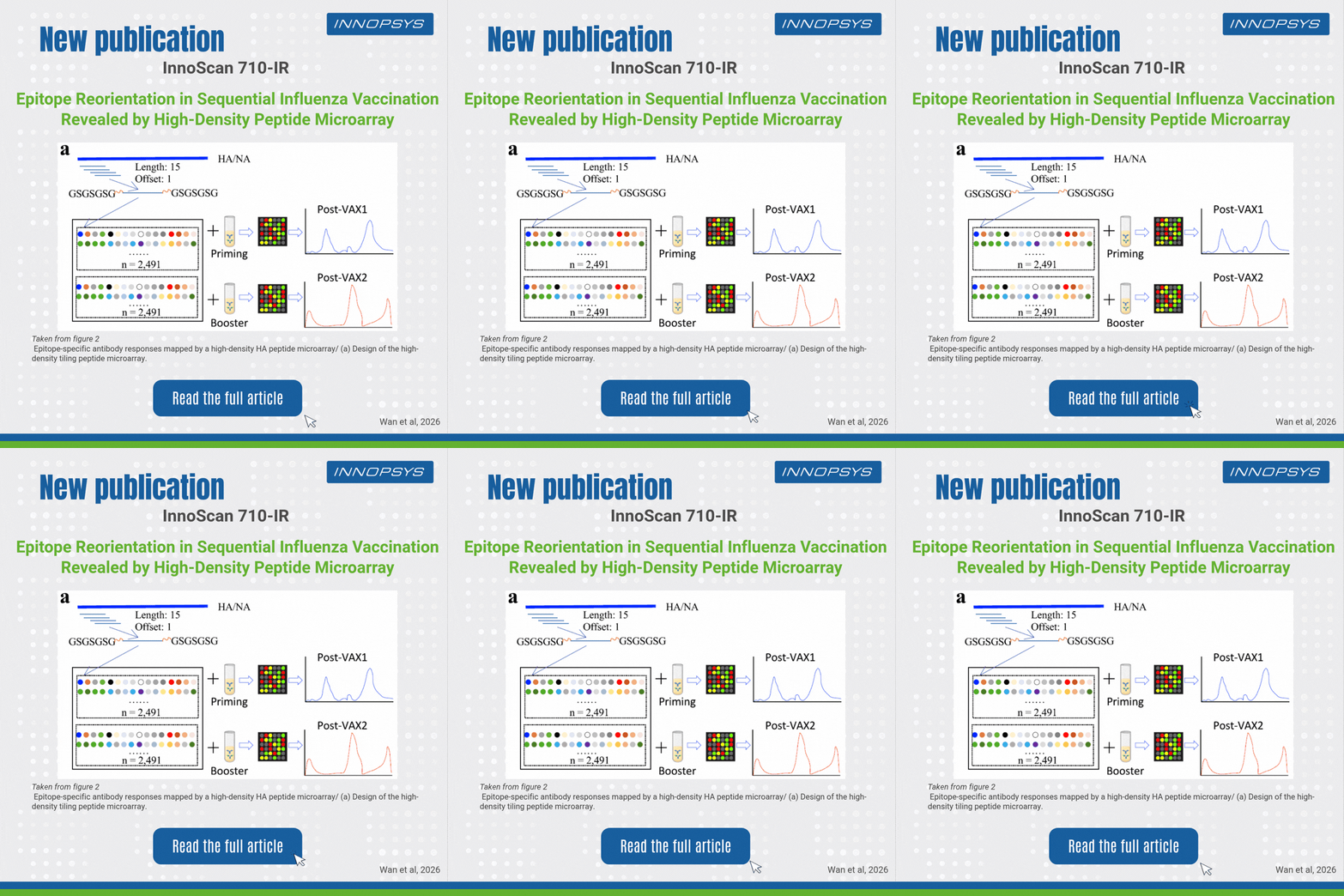
A new study demonstrates that epitope-spanning antigenic variation in sequential influenza vaccines can redirect antibody responses toward conserved hemagglutinin (HA) epitopes, broadening immunity. Using a ferret model, researchers compared distant versus closely related priming strains. To map epitope-specific antibody binding, they employed a high-density peptide microarray scanned with the InnoScan 710IR Microarray Scanner which provided high-resolution, low-background fluorescence detection, enabling precise quantification of serum reactivity across over 2,400 HA-derived peptides. The scanner revealed that distant priming shifts immune focus to conserved head and stem regions, while close priming reinforces variable epitope responses. These findings confirm that epitope hierarchy reshaping works, supporting a vaccine design strategy to overcome immune imprinting.
Original publication : Epitope-spanning antigenic variation reprograms immunodominance and broadens immunity in sequential influenza vaccination | Nature Communications
Keywords:
- epitope mapping
- influenza vaccination
- hemagglutinin
- InnoScan 710IR
- immune imprinting
Check our study on influenza virus with innoquant
We have released an application note “Checking immunofluorescence staining specificity with InnoQuant slide scanner for studying the display of sialic acid in large ferret lung tissue sections“.
This work, in partnership with Dr Robert de Vries and the University of Utrecht, highlights the role of InnoQuant for tissue scanning applied to the study of influenza virus.