
InnoScan 710-IR microarray scanner: new publication
Predictive Blood Biomarkers Illuminate Treatment Paths for Chronic Traumatic Brain Injury Symptoms
An inspiring study published in the Journal of Neurotrauma reveals how specific blood proteins can predict which patients with chronic mental health symptoms after traumatic brain injury (TBI) will respond to targeted therapies.
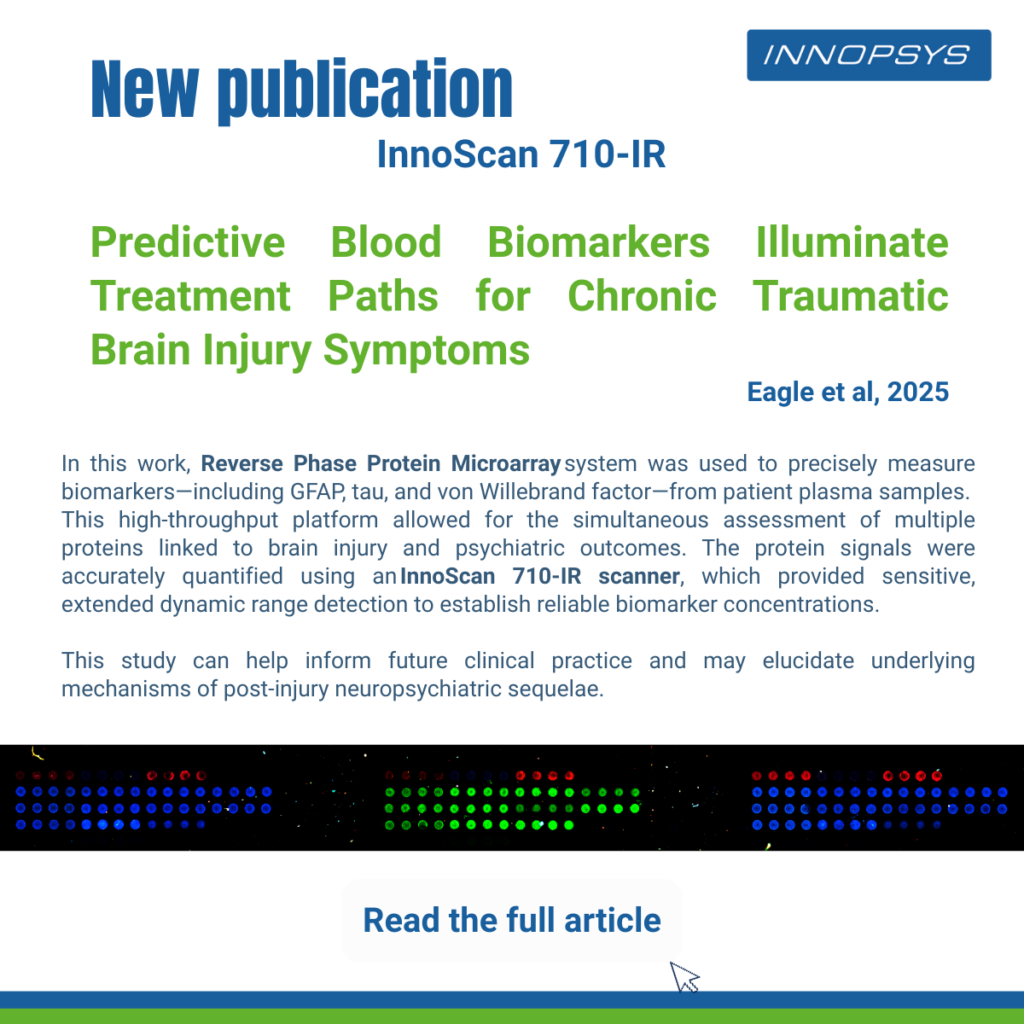
Researchers utilized a Reverse Phase Protein Microarray system to precisely measure biomarkers—including GFAP, tau, and von Willebrand factor—from patient plasma samples. This high-throughput platform allowed for the simultaneous assessment of multiple proteins linked to brain injury and psychiatric outcomes. The protein signals were accurately quantified using an InnoScan 710-IR scanner, which provided sensitive, extended dynamic range detection to establish reliable biomarker concentrations.
This study can help inform future clinical practice and may elucidate underlying mechanisms of post-injury neuropsychiatric sequelae.
Keywords:
- Predictive Biomarkers
- Traumatic Brain Injury
- Protein Microarray
- InnoScan
- Personalized Treatment
Original publication: Predictive Blood Biomarkers of Targeted Intervention for Chronic Mental Health Symptoms following Traumatic Brain Injury
From serum to tissue, it’s just one step. See how Innopsys InnoQuant fluorescent slide scanner extends quantitative biomarker analysis to tissue sections for neurodegenerative disease research. Explore our Fluorescent imaging for CNS cells quantification – Innopsys application note which describes a protocol for assessing induced neuroinflammation in mice using immunofluorescence.